







04 Jun Why More Facilities Are Choosing Fabricated Gates from Whipps, Inc.
Stainless Steel & Aluminum Sluice Gates vs. Traditional Cast Iron Gates
For decades, cast iron sluice gates were considered the standard solution for water control applications. While cast iron gates still exist in many systems today, modern water treatment facilities, pump stations, industrial operations, and flood control projects increasingly require equipment that offers better sealing performance, greater corrosion resistance, easier customization, and longer-lasting reliability.
That’s where Whipps, Inc. stands apart from our competition. At Whipps, Inc., we design and manufacture custom-fabricated aluminum and stainless steel sluice gates engineered to meet the exact needs of each project. Whether the application requires a compact gate for a retrofit installation, a large gate for high-head service, or a completely custom mounting configuration, our 800 Series Aluminum Gates and 900 Series Stainless Steel Gates provide advantages traditional cast iron gates simply cannot match.
A Company Built Around Customization and Customer Satisfaction
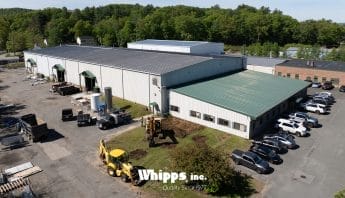
Because customization has always been a core part of the company’s philosophy, Whipps has spent nearly 50 years supplying municipalities, industrial facilities, wastewater treatment plants, and flood control systems with dependable water control equipment designed around real-world operating conditions.
Better Sealing Performance and Lower Leakage Rates
One of the biggest advantages fabricated gates offer over cast iron gates is sealing performance. Whipps, Inc. 800 Series Aluminum Gates and 900 Series Stainless Steel Gates are designed to exceed the leakage requirements associated with traditional cast iron gate standards such as AWWA C-560 and earlier cast iron gate specifications. Our fabricated gates guarantee leakage rates of no more than 0.1 GPM per foot of seating perimeter under both seating and unseating head conditions, including high-head service applications.
This low-leakage performance is achieved through the use of UV-stabilized UHMW seat/seals installed around the perimeter of the gate. These seals are field-proven to maintain their shape and integrity even in abrasive environments and continuous-duty applications. Unlike traditional cast iron gates, Whipps fabricated gates eliminate metal-to-metal contact between the slide and frame. This greatly reduces wear while preventing the gate from “freezing” shut after extended periods of inactivity.
Corrosion Resistance Designed for Long-Term Service
Water treatment and industrial environments are harsh on equipment. Corrosion, oxidation, and chemical exposure can dramatically reduce the service life of cast iron components over time. Whipps aluminum and stainless steel sluice gates are specifically engineered to resist corrosion in demanding applications. Aluminum naturally resists oxidation, while stainless steel provides exceptional durability in corrosive wastewater and industrial environments. This improved corrosion resistance helps facilities reduce maintenance requirements, extend equipment life, and improve long-term reliability.
Fabricated Gates Offer Greater Design Flexibility
Traditional cast iron gates rely on cast patterns and extensive machining processes. This makes unusual sizes, non-standard openings, and custom configurations expensive and difficult to produce. Fabricated gates from Whipps, Inc. provide nearly unlimited flexibility in sizing and design. Our engineering and manufacturing teams can customize gates to fit unique openings, challenging structures, existing channels, tunnels, or pipes where standard cast iron gates may not function properly or may be impossible to install.
Whipps gates can be manufactured in a wide range of mounting configurations, including:
- Wall-mounted Configurations
- Embedded Frames
- Channel-mounted Installations
- Thimble-mounted Systems
- Custom Retrofit Applications
Lower Weight and Easier Installation
Compared to cast iron gates, fabricated aluminum and stainless steel gates are often lighter and easier to handle during installation. Reduced weight can simplify transportation, improve safety during installation, and decrease equipment requirements on-site. For many projects, fabricated aluminum gates also provide a cost advantage over cast iron gates, especially as gate sizes increase. Because cast iron requires expensive casting and machining operations, larger cast iron gates often become significantly more expensive than fabricated alternatives. Whipps fabricated gates help reduce these costs while still delivering high-performance sealing and structural reliability.
Built for Critical Water Control Applications
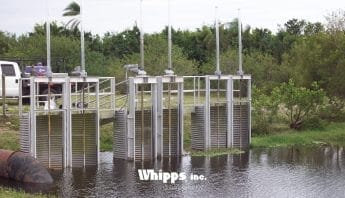
Whipps fabricated sluice gates are trusted in applications where dependable water control is essential for everyday operation and emergency response. These gates are commonly used in:
- Municipal Wastewater Treatment Facilities
- Pump Stations
- Flood Control Systems
- Industrial Water Systems
- Irrigation Infrastructure
- Hydropower Plants
- Stormwater Management Systems
When isolation is required for maintenance or emergency conditions, Whipps also provides stop gates and stop logs designed to protect facilities, isolate equipment, and prevent flooding.
How Whipps Makes a Difference
At Whipps, Inc., every sluice gate is engineered with performance, longevity, and customization in mind. Our fabricated aluminum and stainless steel gates provide the reliability modern infrastructure demands while overcoming many of the limitations associated with traditional cast iron gates. For nearly half a century, we have remained committed to manufacturing American-made water control equipment designed to perform under the toughest conditions because dependable water management is critical to protecting communities, infrastructure, and the environment.